As an ADU builder in Santa Ana, we see steady demand from homeowners who want room for a parent, an adult child or a long-term tenant. The city's older neighborhoods suit it well. Many lots are deep, many have a detached garage at the back, and some have alley access that gives a backyard unit its own entrance.
Still, the best ADU for one Santa Ana lot can be the wrong one for the next. The choice depends on what is already there, how the sewer and electrical service are set up, and whether the main house is historic.
Which ADU fits your Santa Ana lot
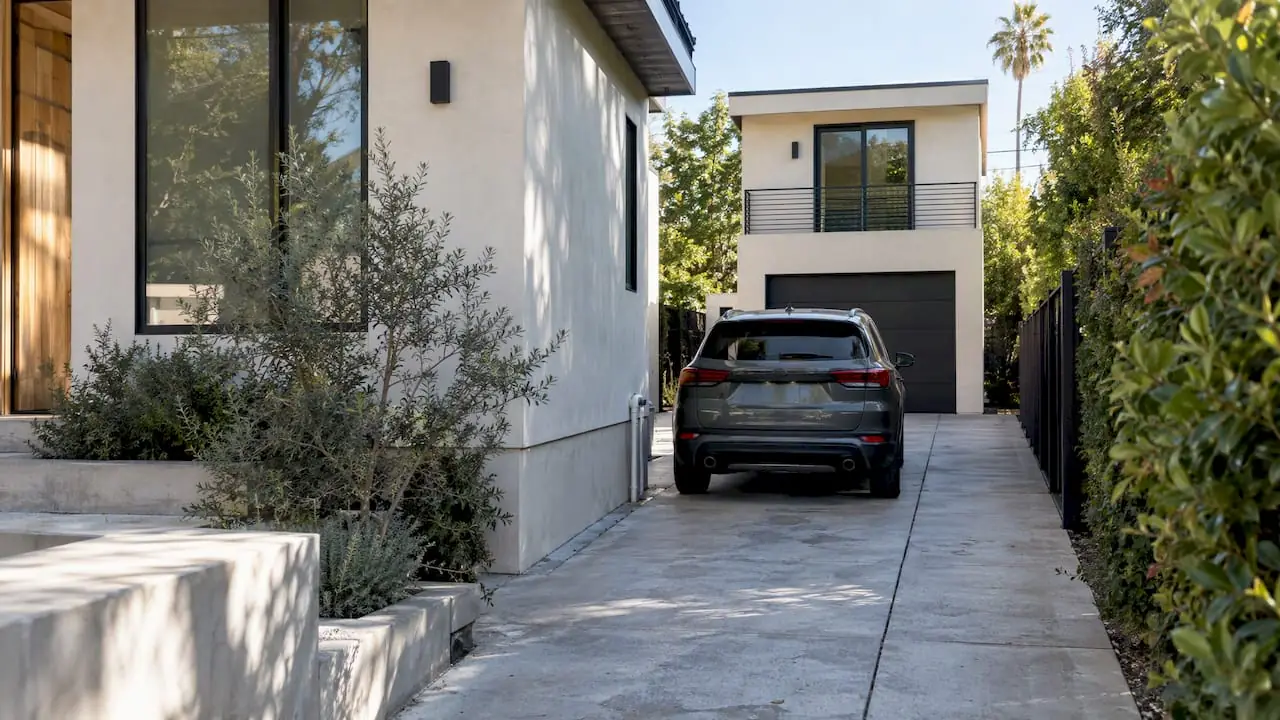
Detached garage conversion
Older homes in neighborhoods like Wilshire Square, Washington Square and Heninger Park often have a one- or two-car garage at the rear of the lot. Converting it is usually the most direct route. The work typically includes a new or upgraded foundation, a new floor system, insulation, windows and a door where the garage door was, plus new plumbing and electrical runs from the house. If the old structure is in poor shape, rebuilding on the same footprint can cost little more than repairing it.
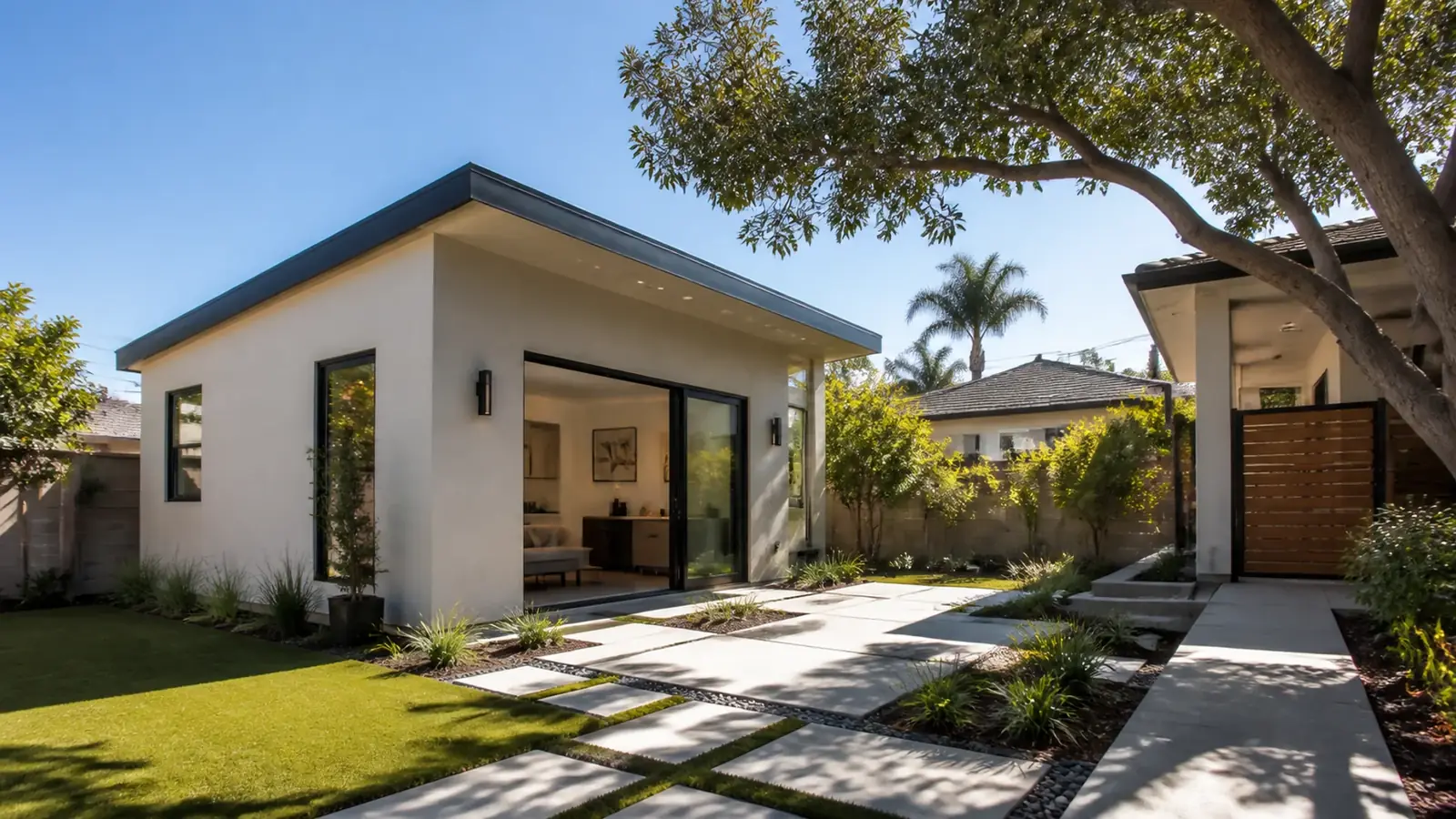
New detached ADU
Where there is yard space, a new detached unit gives the most privacy. State law allows side and rear setbacks as small as four feet for most ADUs, which helps on narrower lots. Height and size limits depend on the type of unit and the lot.
Attached ADU or attached garage conversion
Mid-century tract homes usually have an attached garage. Converting it into an ADU keeps the work within the existing footprint, but the shared wall needs a fire-rated assembly and sound control.
Junior ADU
A JADU of up to 500 square feet is created inside the house, usually from an existing bedroom with a new exterior door and a small kitchen. It is the least construction of any option.
Our article on attached versus detached ADUs compares the tradeoffs in more depth.
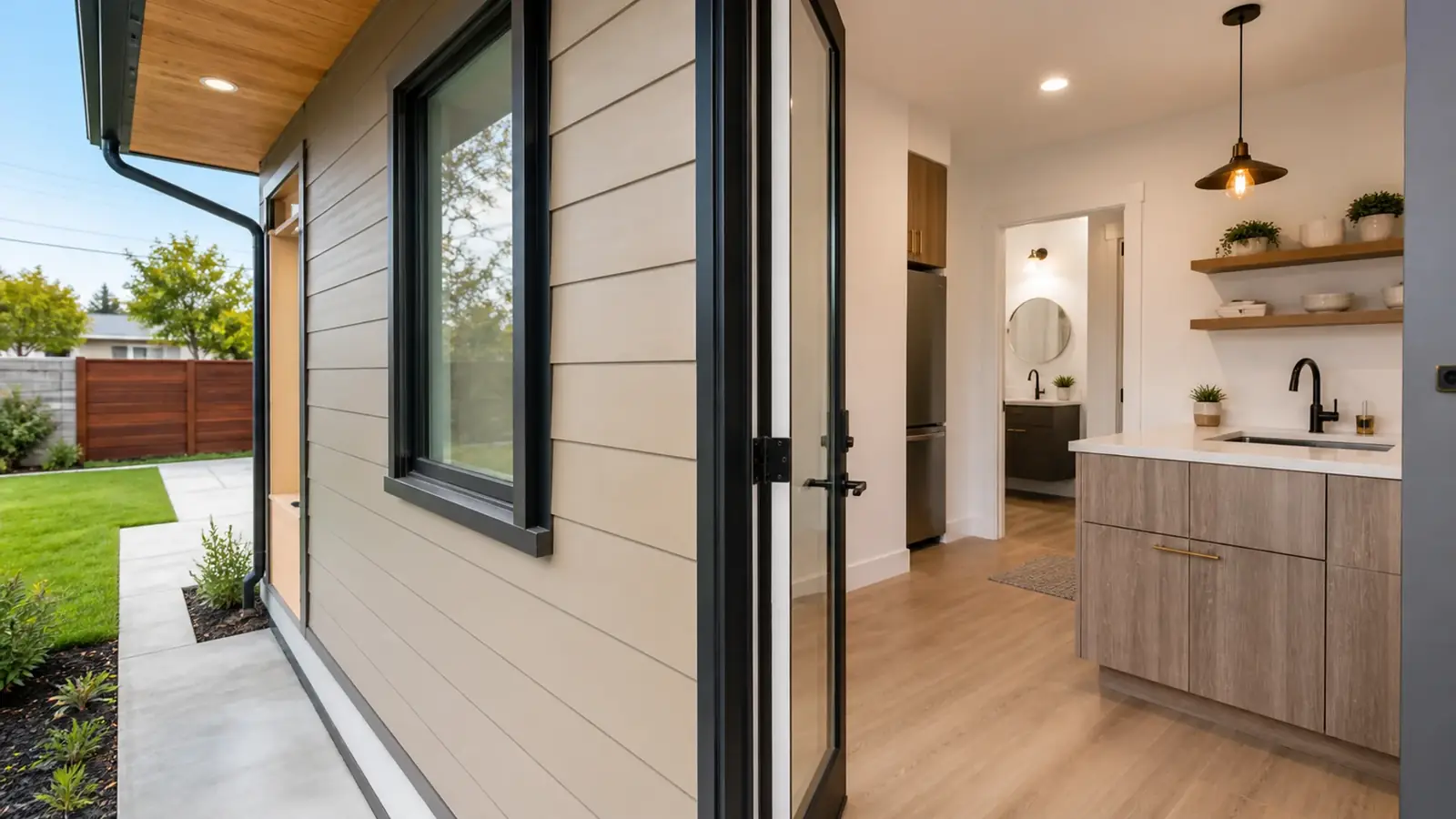
ADU builder in Santa Ana: historic and older properties
Santa Ana's historic neighborhoods, including French Park, Floral Park and Wilshire Square, do not rule out ADUs. They do mean the design deserves more care. If your home is listed on the Santa Ana Register of Historical Properties, the city may review the ADU for compatibility with the historic house, especially where it is visible from the street. Matching roof pitch, siding and window proportions is often enough. A rear unit behind the main house typically raises fewer questions than an attached one.
Older properties also bring practical issues. The sewer lateral may be clay pipe with root intrusion, and the electrical service may be too small to support a second kitchen and a heat pump. We scope a camera inspection of the sewer and a load review of the panel before design is finished, because both affect the budget.
Permits for an ADU in Santa Ana
ADUs in Santa Ana are reviewed by the city's Planning and Building Agency under California's ADU laws plus local standards. A few state rules are worth knowing:
- ADUs and JADUs are allowed on single-family lots statewide, subject to size, height and setback limits.
- Most ADUs can use four-foot side and rear setbacks.
- No replacement parking is required when a garage is converted, and properties near public transit are generally exempt from ADU parking.
- The city must act on a complete application within 60 days.
- Impact fees are waived for ADUs under 750 square feet; larger units pay fees proportional to size.
California's housing department publishes an ADU handbook at hcd.ca.gov. Rules change often, so we confirm the current local standards for your parcel before drawing.
What drives ADU costs
- Type of unit. A JADU or garage conversion uses existing structure; a new detached unit builds everything from the foundation up.
- Size and layout. Kitchens and bathrooms are the most expensive square footage.
- Utilities. Trench length to the sewer, water and electrical, and whether you want a separate meter.
- Panel and service upgrades in older homes.
- Foundation condition of an existing garage.
- Exterior matching on historic properties.
- Finish level for cabinets, flooring, fixtures and appliances.
Our guide to ADU utility connections explains the trenching and metering choices that often surprise owners.
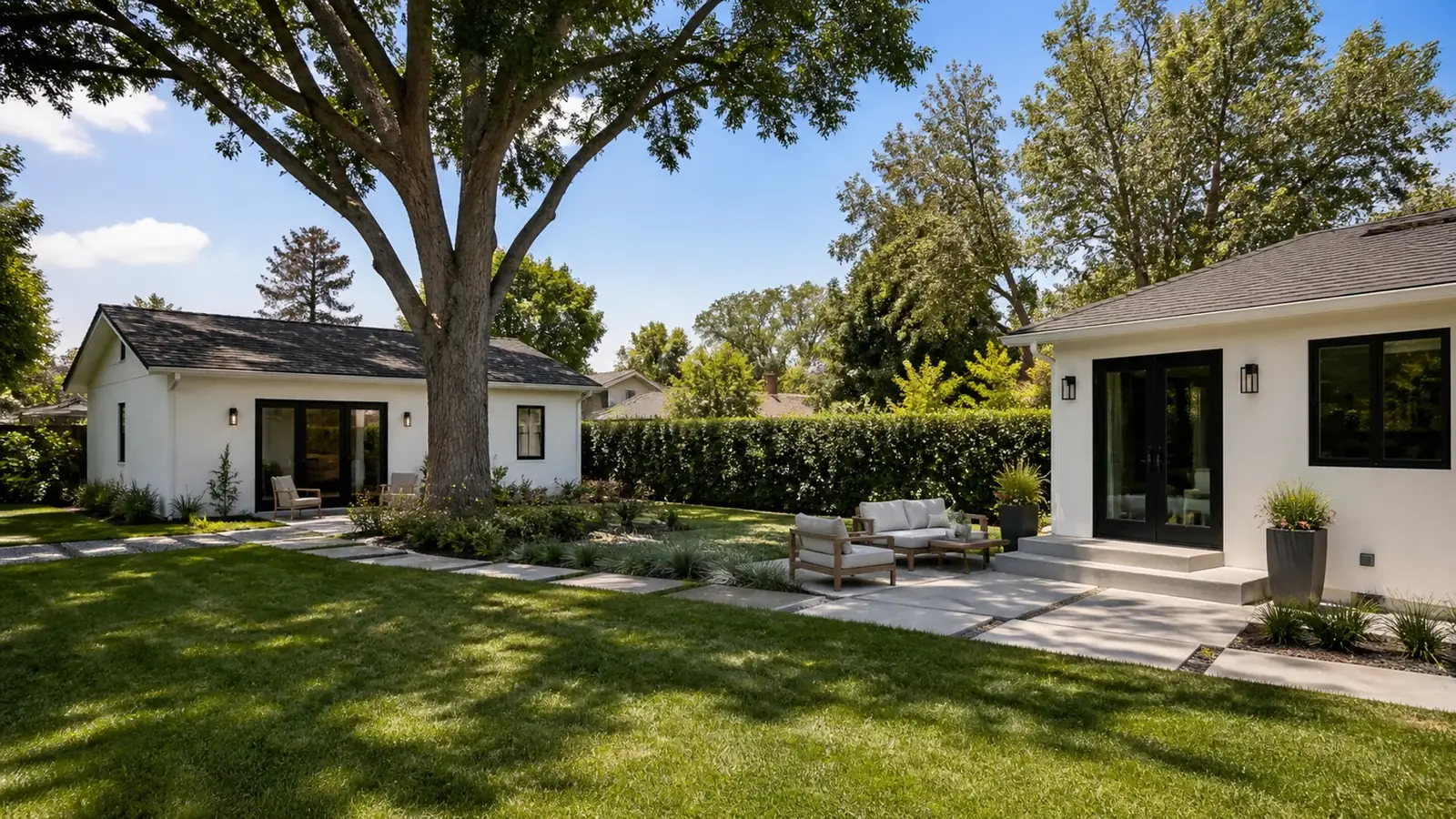
Timeline factors
Expect design and engineering first, then city review with any correction rounds, then construction. Garage conversions usually move faster than new detached units. The schedule depends on how quickly utility upgrades are coordinated with Southern California Edison or the gas company, inspection timing, and long-lead items such as windows. Historic compatibility questions are best settled during design so they do not reopen during review.
One decision speeds up everything that follows: how the unit will be used. A unit for an aging parent may need a step-free entry and a larger bathroom. A rental may need a separate address, a mailbox and its own gate from the alley. Settling that in the first meeting keeps the design from being redrawn later.
What Mr Build handles
We have delivered more than 50 ADUs, and on each one we take care of the whole job: feasibility review, design, structural and energy engineering, permit submittal and corrections, utility coordination, and construction through final inspection. You get a fixed written scope and a dedicated project manager, and the project follows our five steps from free consultation to final walkthrough. If you are weighing an ADU against a bedroom addition, our room addition contractor in Santa Ana page covers the other option, and the ADUs and additions page explains our full service.