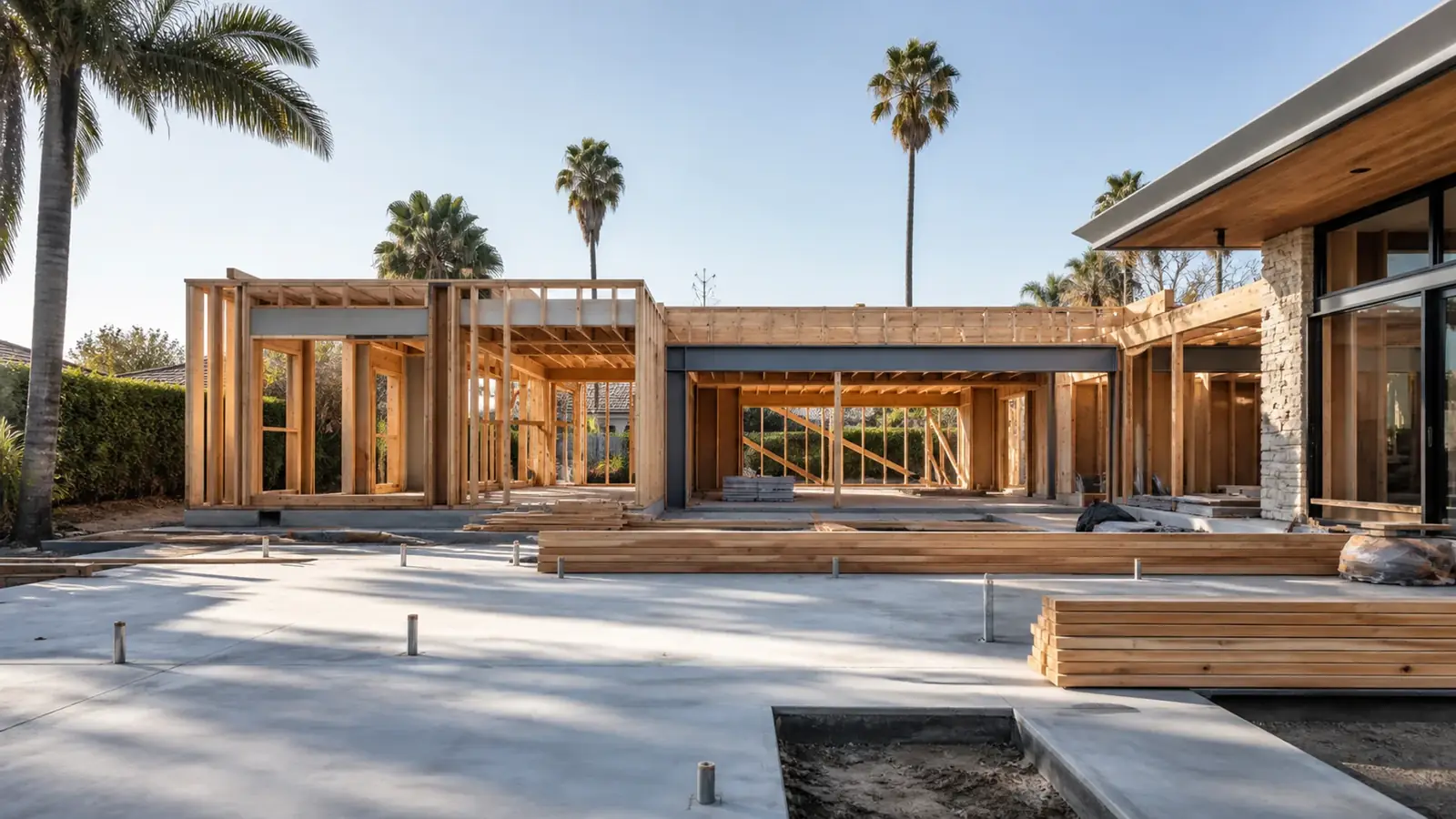
Some houses are not worth saving. In Costa Mesa, that often means a small 1950s or 1960s ranch with a failing slab, old drain lines, low ceilings and a layout that fights every change you try to make. Demolition and rebuild in Costa Mesa replaces it with a new home designed for the lot and for how you live, without the compromises of working around the old structure.
As a demolition and rebuild contractor in Costa Mesa, Mr Build runs both halves of the job: taking the old house down safely and legally, and building the new one.
Remodel or rebuild? How to decide
We usually recommend a feasibility review before anyone commits to demolition. These are the questions that tip the decision:
| Question | Points toward remodel | Points toward rebuild |
|---|---|---|
| How much of the floor plan changes? | A few rooms | Most of the house |
| Is a second story planned? | No | Yes, and the foundation needs replacing anyway |
| Condition of slab and framing | Sound, minor cracks | Settlement, termite damage, repeated repairs |
| Plumbing and electrical | Partly updated | Original throughout |
| Ceiling height and window placement | Acceptable | Low and poorly placed for the new plan |
If most answers fall in the right-hand column, a new home often costs about the same as a deep remodel for far more value. Our page on whole-home remodeling in Costa Mesa covers the other path.
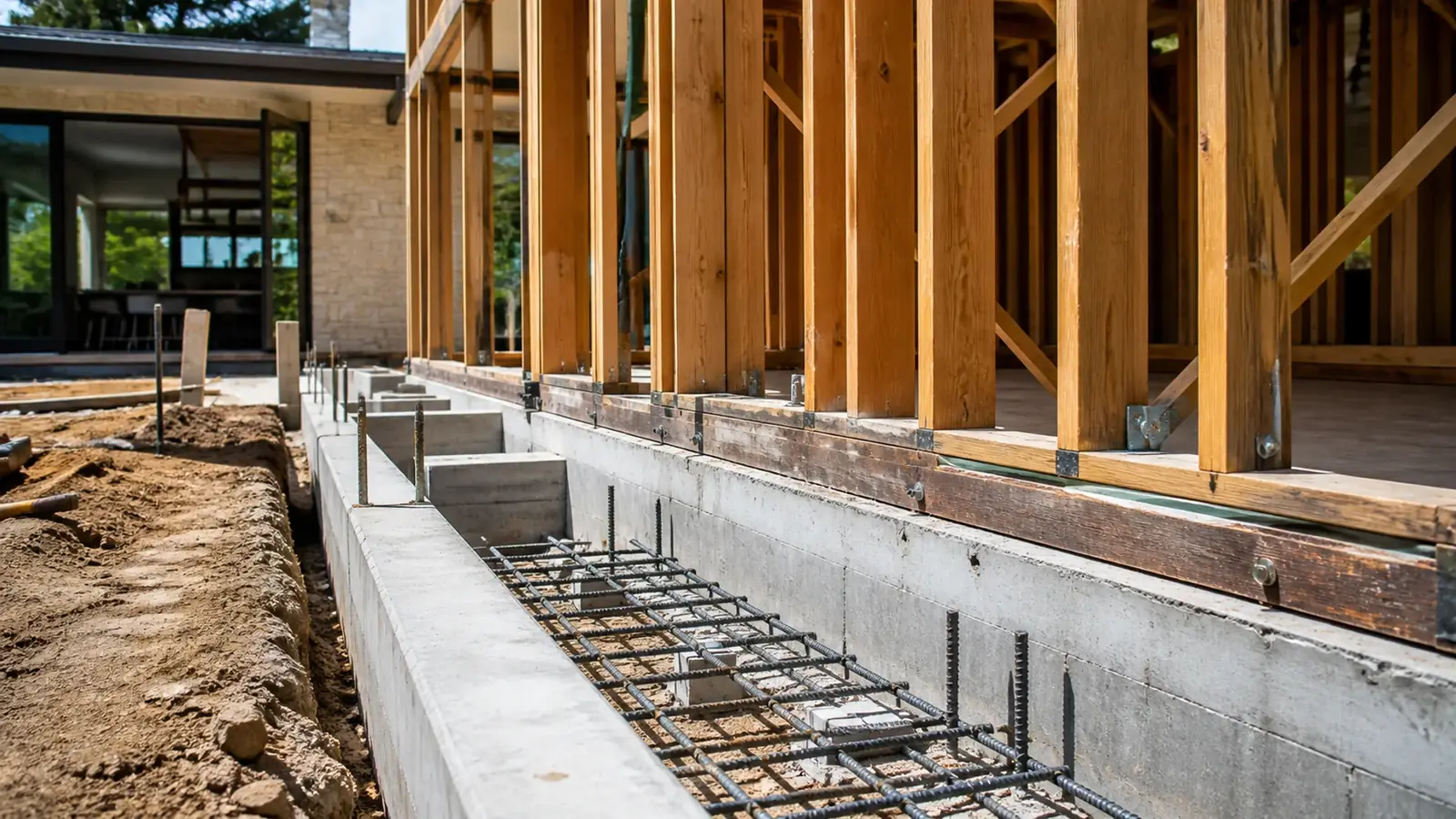
Teardowns on the Eastside, Westside and in Mesa Verde
Costa Mesa was built quickly after World War II, and much of that housing stock has reached the age where replacement is common. Rebuild activity varies by area:
- Eastside owners often replace an original single-story house with a two-story home that makes better use of a larger lot.
- Westside rebuilds frequently pair a new house with an ADU, or follow a lot split that creates room for two homes.
- Mesa Verde rebuilds tend to keep a low, wide profile that fits the neighborhood's ranch character, with more volume toward the rear.
In each case, the new design has to meet current zoning and the city's residential design standards for two-story homes, which can differ from what the old house was allowed.
What happens before demolition day
Demolition is a short phase, but it has the longest checklist. In order, we:
- Commission an asbestos survey and, if needed, lead testing, then schedule licensed abatement.
- File the required notification with the regional air quality district.
- Request gas and electric disconnects from SoCalGas and Southern California Edison, and cap the sewer lateral as the sanitary district requires.
- Identify trees to protect and plan fencing, erosion control and dust control.
- Pull the City of Costa Mesa demolition permit, usually alongside the new-home permit so there is no long gap with an empty lot.
- Plan for recycling and diversion of debris, which the state green building code requires on most projects.
Neighbors appreciate notice before heavy equipment arrives. We tell adjacent owners what to expect and keep the street and sidewalk clean during hauling.
What can be saved
A teardown does not have to mean losing everything. Before demolition, we walk the house with you to mark items worth keeping: a fireplace surround, solid wood doors, light fixtures, landscape boulders or a mature tree that can be protected in place. Some owners keep the existing driveway approach or a sound block wall at the property line, which trims site work. Anything salvaged is listed in the scope so the demolition crew knows exactly what stays.
Permits for demolition and rebuild in Costa Mesa
A rebuild involves two permits from the City of Costa Mesa: demolition and new construction. The new home goes through planning review and building plan check, including structural, energy and fire sprinkler review, plus public works review for the driveway, drainage and any work in the right of way. Submitting both together, and timing demolition after the new plans are approved, keeps holding costs down. Current requirements are published on the City of Costa Mesa website.

Cost drivers and timeline factors
The rebuild budget has a few items a remodel does not:
- Abatement. The amount and type of asbestos or lead found sets this cost.
- Demolition and haul. Size of the house, slab thickness, pools, hardscape and site access.
- Foundation and soils. The soils report may call for overexcavation and recompaction or deeper footings.
- New utility services. Upsized water and sewer connections or a new electrical service.
The design of the new home then drives the rest. For a breakdown of fixed and open-ended pricing models, see our article on cost-plus versus fixed-price contracts.
On schedule, the critical path runs through design and city approval, not demolition. Once permits are issued, abatement and demolition can be completed quickly, and the new foundation follows the soils engineer's sign-off on the prepared pad.
Plan for housing costs during this period too. Unlike most remodels, a rebuild means living elsewhere from demolition to final inspection, so the length of design and approval decides when you need to give notice or line up a rental. We give you a planning schedule early for exactly that reason.
What Mr Build handles
We take a rebuild from feasibility to final: site assessment, hazardous materials testing, abatement coordination, utility disconnects, demolition, site preparation, design and engineering through our partners, permits, new construction and final inspection. A single project manager runs the job through our five steps from consultation to final walkthrough. For more on the new-home side, see our custom home builder in Costa Mesa page or the main demolition and rebuild service.