In this article
- How Much Does an ADU Rent For?
- From Gross Rent to Net Income
- Using ADU Rent to Qualify for a Loan
- How ADU Rental Income Is Taxed
- Rules That Affect Rental Income in Los Angeles
- Long-Term, Mid-Term or Furnished Stays?
- Design Choices That Raise ADU Rent
- Mistakes That Inflate ADU Income Projections
- Lease Terms for a Shared Lot
- How Mr Build Helps You Build an ADU That Rents Well
ADU rental income depends mostly on your neighborhood, the unit's size and layout, and how private it feels. In the Los Angeles area in 2026, many one-bedroom ADUs rent somewhere in the $2,000s to low $3,000s a month, with studios lower and larger units higher, but your own local comparables matter more than any average. What you keep is smaller: subtract vacancy, insurance, added property tax, maintenance and income tax, and remember that lenders count only part of the rent when you borrow.
This guide walks through how to estimate rent, turn it into a net number and design the unit so it rents well for years. All dollar figures here are rough estimates for planning, not quotes or promises.
How Much Does an ADU Rent For?
Two ADUs of the same size a few miles apart can rent for very different amounts. The biggest factors are:
- Location. Walkable streets, transit, and proximity to hospitals, studios, universities and job centers push rent up.
- Layout. A true one-bedroom with a door on the bedroom usually rents for more than an open studio of the same size.
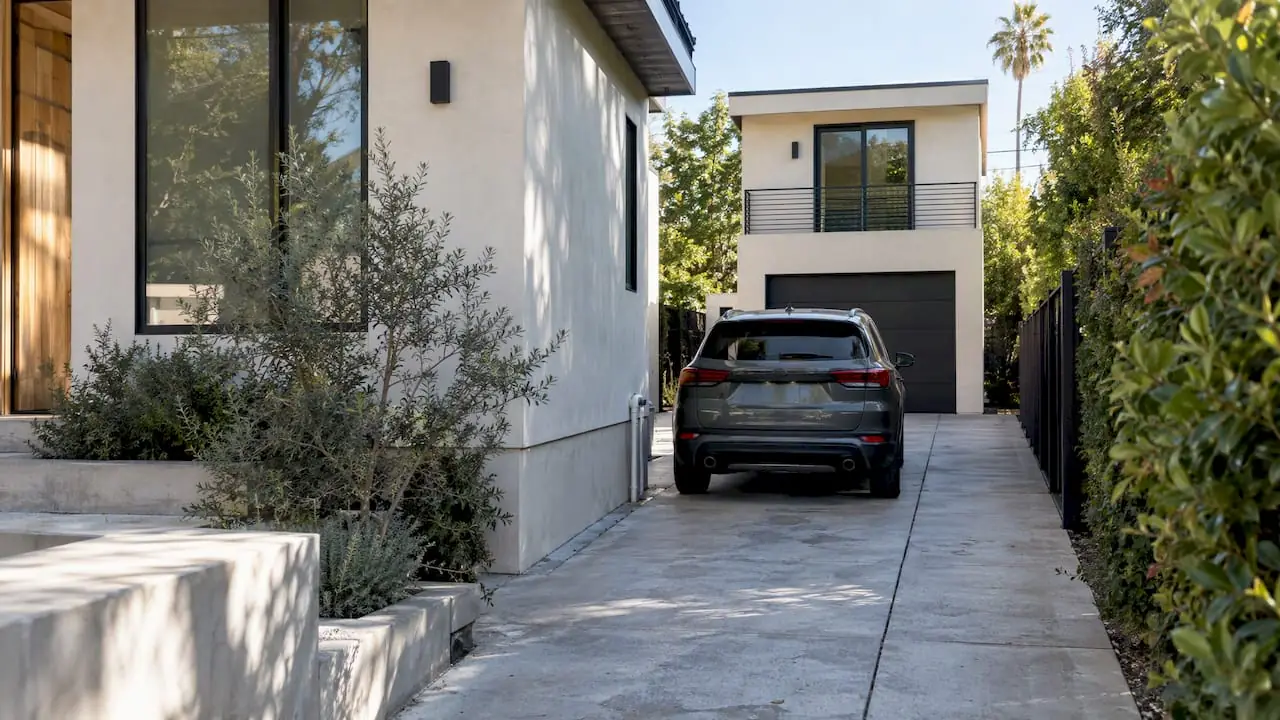
- Privacy. A separate entrance, its own outdoor space and distance from the main house matter to tenants.
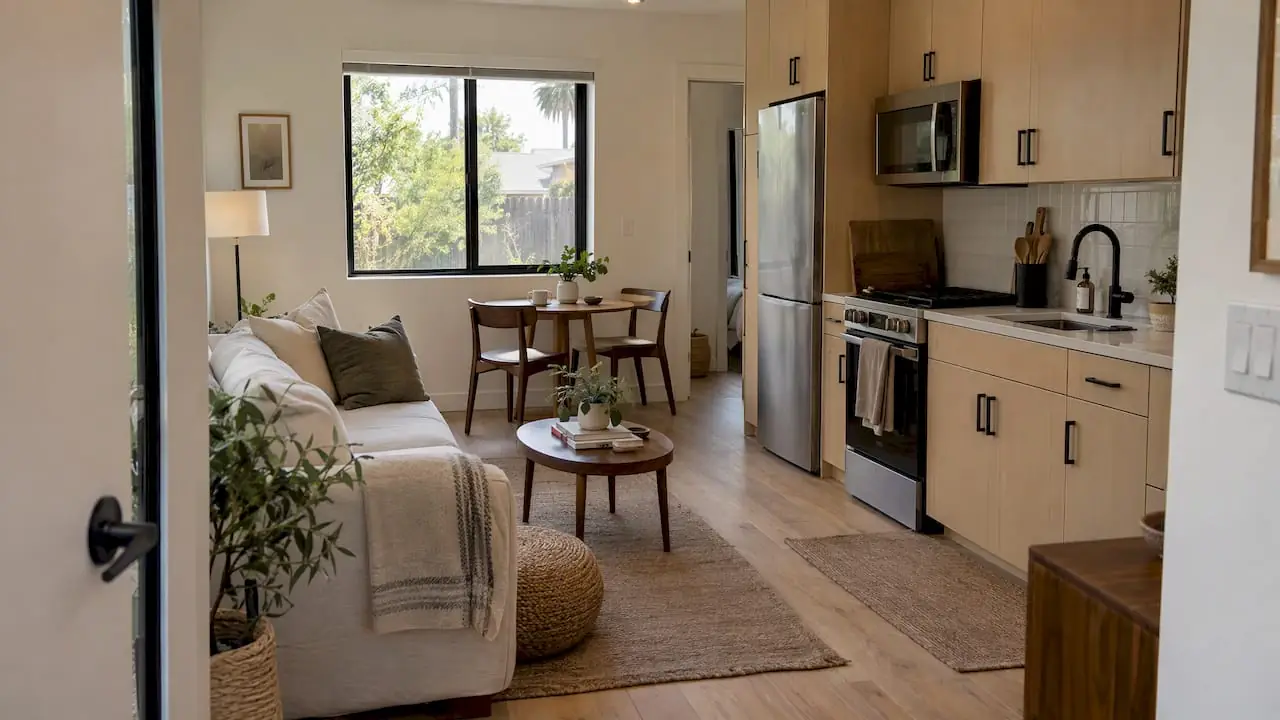
- Finishes and features. In-unit laundry, a full kitchen, ducted heating and cooling and good storage support a higher rent.
- Parking. In neighborhoods with tight street parking, an assigned spot is worth real money.
How to estimate your rent
- Find three to five current listings within about a mile that are similar in size, bedroom count and privacy.
- Prefer other ADUs or guest houses over apartments, since tenants compare them differently.
- Adjust for what yours will have that they do not, such as laundry or parking, and vice versa.
- Use the middle of the range, not the top, for your planning number.
From Gross Rent to Net Income
Gross rent is what the tenant pays. Net income is what is left after the costs of owning and running the unit. Work through it in this order:
- Start with a realistic monthly rent from your comparables.
- Subtract a vacancy allowance, often around 5% for long-term rentals, for turnover and gaps between tenants.
- Subtract added property tax. In California, building an ADU adds the value of the new construction to your assessed value, but the main house is not reassessed.
- Subtract the added insurance cost for the ADU and for being a landlord.
- Subtract a maintenance and repair reserve, often around 5% of rent.
- Subtract any utilities you include in the rent.
Here is a hypothetical example to show the math. Your numbers will differ.
| Line item | Monthly (example) |
|---|---|
| Gross rent | $2,800 |
| Vacancy allowance (5%) | -$140 |
| Added property tax | -$320 |
| Added insurance | -$60 |
| Maintenance reserve (5%) | -$140 |
| Utilities included in rent | -$120 |
| Net before financing and income tax | $2,020 |
That example works out to about $24,000 a year. If the ADU cost $350,000 to build, a simple payback would be roughly 14 years before financing costs and income tax, not counting any increase in property value. A garage conversion that costs less to build pays back faster, even at a lower rent. If you borrowed to build, subtract the loan payment to see your actual monthly cash flow.
Using ADU Rent to Qualify for a Loan
If you are financing the build, the future rent can help you qualify, but only in part. FHA guidelines updated in 2023, along with Fannie Mae and Freddie Mac programs, let lenders count ADU rental income, including projected rent on a unit that is being built. Typical limits:
- An appraiser estimates market rent from comparable rentals, often on a standard rent schedule form.
- The lender reduces that rent for vacancy and expenses before adding it to your income.
- ADU rent is commonly capped at around 30% of your total qualifying income.
- Without a signed lease or rental history, lenders may count even less.
Ask your loan officer to run your actual file before you count on a number. Our guide to ADU financing in California covers the loan options in detail.
How ADU Rental Income Is Taxed
Rent from an ADU is generally taxable income, reported on Schedule E of your federal return, and California taxes it too. The good news is that real expenses reduce what you pay tax on:
- The ADU's share of mortgage interest and property tax
- Insurance on the rental portion
- Repairs, maintenance and utilities you pay for the tenant
- Depreciation of the ADU structure, which for residential rentals is generally spread over 27.5 years
When a cost covers the whole property, such as a new roof or a shared water bill, you allocate it between the house and the ADU using square footage or another consistent method. Keep every receipt, lease and deposit record in one place. The same records support your tax return and any future refinance. A tax professional should confirm how the rules apply to you.
Rules That Affect Rental Income in Los Angeles
Your income plan has to fit local rules. In the City of Los Angeles, keep these in mind:
- Owner occupancy. State law no longer allows cities to require that you live on the property to rent an ADU. Junior ADUs are the exception: the owner must live in the main house or the JADU.
- Short-term rentals. State law lets cities require ADU rentals to be for more than 30 days, and Los Angeles restricts short-term rentals in ADUs. Plan around long-term or 30-day-plus stays.
- Tenant protections. State tenant protection law and Los Angeles's own rules can affect rent increases and evictions. Check which apply to your unit with the Los Angeles Housing Department.
- Selling separately. In most cases an ADU cannot be sold apart from the main house, so treat it as part of one property.
- HOAs. If you have an HOA, it may set its own rental rules, within the limits state law allows.
Other cities, such as Beverly Hills or Irvine, apply the same state framework with their own local details, so confirm with the city where the property sits.
Long-Term, Mid-Term or Furnished Stays?
- Long-term leases of a year or more give the steadiest income, the least management and the documentation lenders prefer.
- Furnished stays of 30 days or more suit areas near hospitals, studios and universities, where traveling professionals and people between homes look for short leases. They can command higher rent, but you pay for furniture, more turnover and more cleaning.
- Housing family brings no rent, but it can replace the cost of assisted living, childcare or a relative's apartment, which is real value too.
Design Choices That Raise ADU Rent
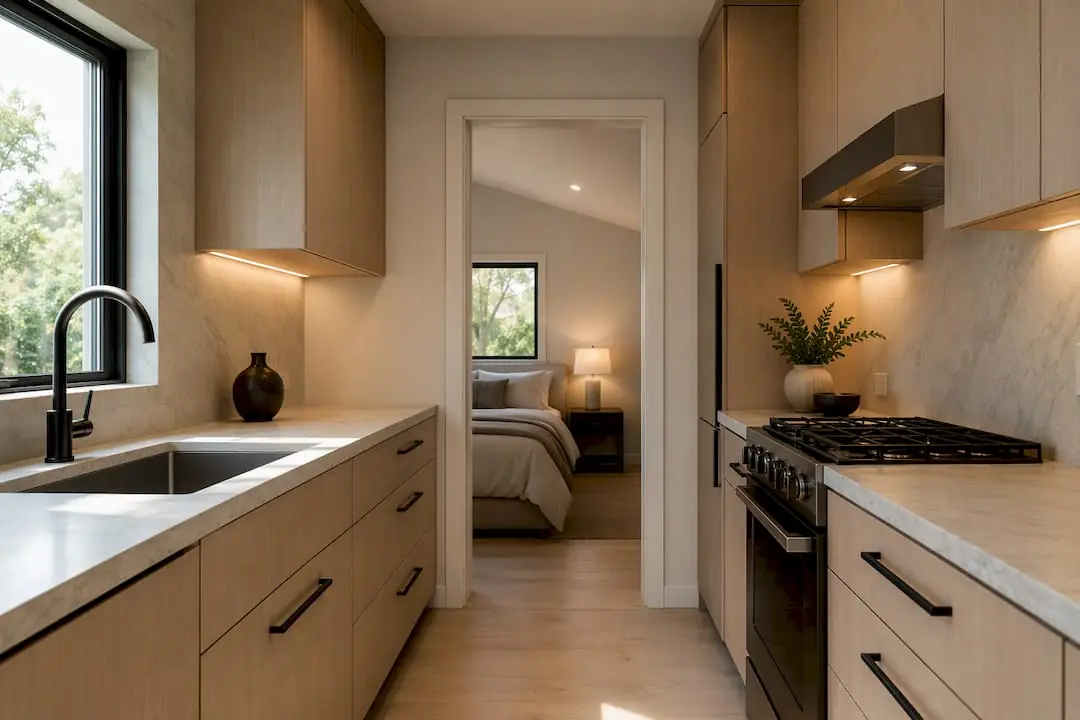
Decisions made before construction set your rent ceiling for decades. The features we see tenants respond to most:
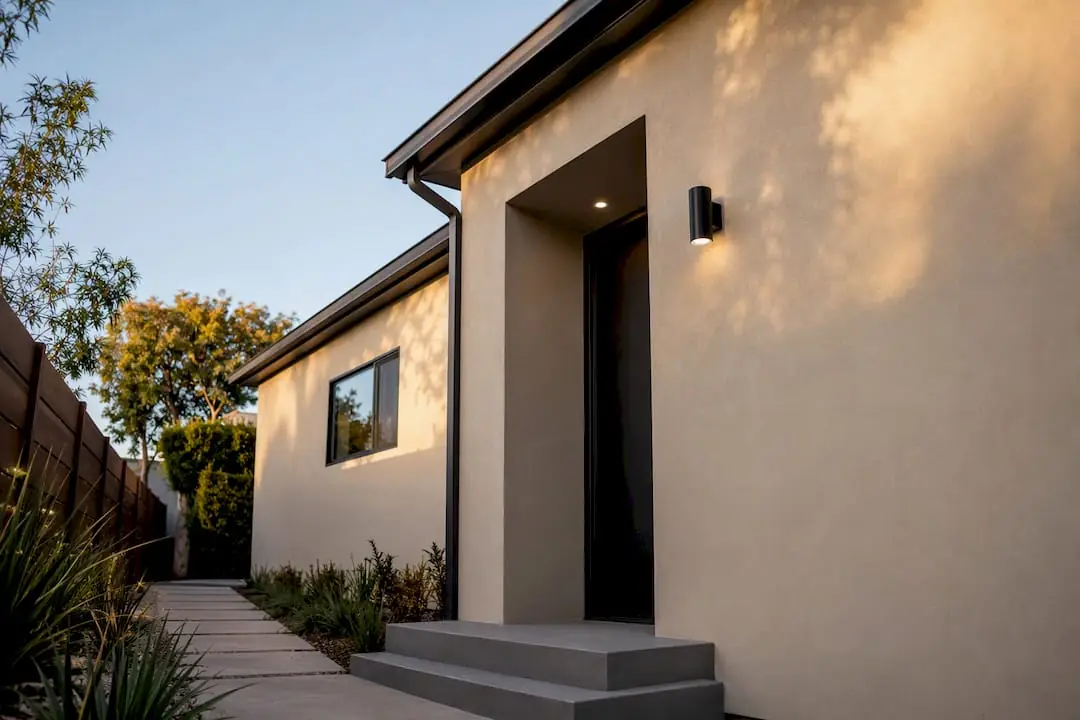
- A private entrance and a path that does not cross the main house's yard
- A separate bedroom with a door, even in a compact plan
- In-unit laundry, even a stacked washer and dryer
- Sound control, including insulated walls and careful window placement facing the main house
- A full galley kitchen with real counter space and storage
- Durable finishes, such as luxury vinyl or tile flooring and solid-surface counters, which cut turnover repairs
- Separate utility tracking where possible, through sub-meters if a separate utility meter is not allowed
For layouts that make the most of a small footprint, see our post on small ADU floor plans. Utility metering choices are covered in our guide to ADU utility connections.
Mistakes That Inflate ADU Income Projections
Most disappointing ADU numbers come from a projection that looked better on paper than the unit could deliver. Watch for these:
- Using a nightly short-term rate as the baseline when the city limits short stays
- Comparing a studio to one-bedroom listings, or a shared-entry unit to fully private ones
- Forgetting the added property tax and insurance
- Assuming the lender will count the full rent toward your loan
- Leaving out a vacancy allowance and a repair reserve
- Underestimating the build cost by skipping utility upgrades, site work and permit fees
A conservative projection that still works is a much better reason to build than an optimistic one that barely does.
Lease Terms for a Shared Lot
An ADU tenant lives a few steps from you, so the lease should cover what a standard apartment lease does not: which parking space is theirs, how utilities are split if the unit shares a meter, which parts of the yard and driveway they can use, trash and recycling areas, and quiet hours. Screen tenants the same way you would for any rental, with income verification, a credit check and landlord references, and follow fair housing rules. Do a move-in walkthrough with photos of the unit and the shared areas.
How Mr Build Helps You Build an ADU That Rents Well
Mr Build Co. has delivered more than 50 ADUs. We handle design, plans, engineering, permits and construction as one process, so layout, privacy and utility decisions are made with rent in mind from the first sketch. You get a fixed, detailed written scope and pricing to plug into your income math, and a dedicated project manager through construction.
Learn more about our ADU and addition services and our work in Los Angeles, or schedule a free on-site consultation to see what your lot can support.
Sources and further reading
- $1,200 to $2,500 a month buildwithaplan.com
- zeitro.com: can i use adu income to qualify zeitro.com
- homebuyer.com: rental income b3 3 1 08 homebuyer.com
- HUD’s Mortgagee Letter archives.hud.gov
- FHFA research on ADU appraised values fhfa.gov
- municipal ADU guidance like San Diego’s sandiego.gov
- AMI-based eligibility rules sheriff.loudoun.gov