


For streamlined additions, ADUs, and renovations, design-build usually wins on speed and single-source accountability. For highly custom homes or technically demanding sites, an architect-led approach usually wins because it puts an independent advocate in charge of design fidelity. The right answer depends less on preference and more on project complexity, timeline pressure, and how much you want one company to own every decision.
TL;DR:
- Design-build projects are best suited for simple additions, ADUs, and remodels with standard configurations, where quick turnaround and single accountability matter most.
- Architect-led delivery is preferable for fully custom homes, complex site conditions, or projects requiring independent design advocacy and detailed bid comparisons.
- Risks in design-build include rushed design affecting quality, while architect-led projects face potential bid surprises and buildability issues due to less integrated planning.
- Speed and cost savings in design-build rely heavily on owner engagement and avoiding teams with weak design discipline.
- Asking detailed questions and reviewing project histories help determine whether a firm prioritizes timely delivery or design fidelity.
Table of Contents
- Design-Build vs. Architect: What the Single-Contract Model Means for You
- How the Architect-Led Approach Works
- Design-Build vs. Architect: Comparing the Trade-Offs
- How to Choose: Questions, Checklists, and Red Flags
- Why Mrbuild Believes Integration Beats Division on Most Residential Projects
- If You Want an Integrated Team, Here’s Where to Start
- Sources
- FAQ
Design-Build vs. Architect: What the Single-Contract Model Means for You
Design-build puts design and construction under one contract with one company. Instead of hiring an architect first and a contractor second, you sign with a single design-builder who owns both scopes, which is why AIA Contracts describes it as collapsing the traditional owner-designer-builder triangle into a two-party relationship. That team might be a contractor with in-house designers or a licensed architect who also builds. Contract structures vary, but two are common: a guaranteed maximum price (GMP), where the scope and budget lock in before construction starts, and progressive design-build, where design and pricing develop together in phases.
This model asks more of you early. You need to make finish and layout decisions sooner because design and construction phases often overlap, a practice known as fast-tracking. Homeowners who thrive here are decisive and comfortable trusting one team with both vision and execution.
Design-build tends to suit:
- ADUs and detached accessory units with fairly standard configurations
- Additions that don’t require major structural reinvention
- Kitchen and bathroom remodels with a defined scope
The failure mode to watch for is a design-builder who treats design as an afterthought. DBIA’s own guidance stresses that owners must stay engaged from the first meeting through completion for the model to deliver its advantages. Skip that engagement, or hire a team without real design discipline, and you get a house that was built fast but not built well.
How the Architect-Led Approach Works
Architect-led delivery, often paired with design-bid-build, means you sign one contract with an architect and a separate contract with a contractor once design is complete. The architect handles the creative and technical work: zoning research, structural coordination, construction drawings, and acting as your advocate once building begins. Licensed architects are trained to navigate constraints that trip up less specialized teams, particularly on sloped lots, historic overlays, or additions to older structures.
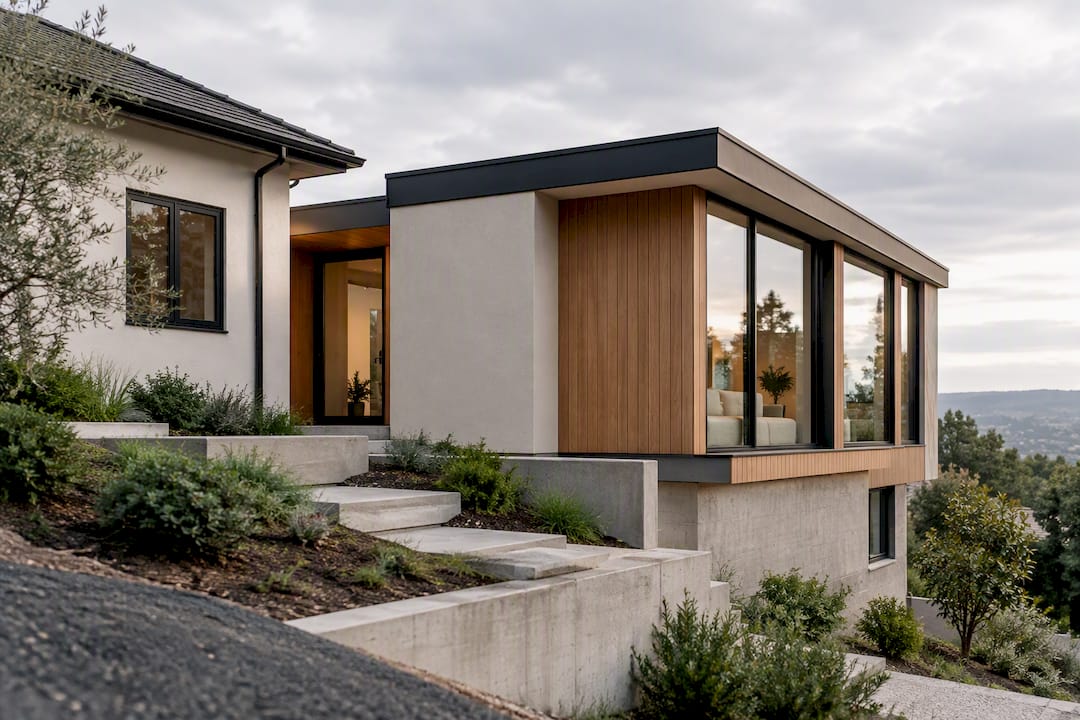
Sequencing looks different here. Design is largely finished before a contractor ever bids the job, which gives you a fixed, detailed set of documents to compare across bids. It also means more time passes before a shovel hits dirt.
This path tends to fit:
- Fully custom homes where the design itself is the priority
- Lots with steep grades, easements, or unusual zoning
- Historic or architecturally significant properties
- Projects where you want an independent professional checking the builder’s work, not the builder checking their own
The tradeoff is time and, occasionally, friction. If you competitively bid the construction phase, the disconnect between the design team and the winning contractor can create finger-pointing over buildability or cost surprises that never got tested during design. Architecture practitioners note that architects handle structural coordination and zoning precisely because those risks are real when nobody with construction expertise is in the room while drawings are being finalized.
Design-Build vs. Architect: Comparing the Trade-Offs
The core difference comes down to accountability. Design-build gives you one point of contact who answers for design, budget, and schedule. Architect-led delivery gives you a professional whose only job is protecting your interests, which some owners value more than convenience once a contractor enters the picture.
Performance data backs up the speed argument for design-build. DBIA’s Data Sourcebook research shows design-build projects historically achieve faster construction and less cost and schedule growth compared with design-bid-build and construction management at risk. That advantage shows up most clearly on projects with best-practice team communication and clear owner engagement, not on every project regardless of execution.
Here’s how the practical risks break down and how to manage them:
- Design-build risk: design gets rushed to protect schedule. Ask for interim design submission requirements in writing, and request a sample schedule showing design milestones, not just construction ones.
- Architect-led risk: bid-phase surprises inflate cost or trigger redesigns. Bring a contractor in for a buildability review before finalizing drawings, even if you plan to bid competitively later.
- Either model’s risk: liability gaps when design and construction responsibilities blur. Insurance discussions among architects note that errors-and-omissions coverage in design-build needs contract language spelling out where design liability ends and construction supervision begins.
- Either model’s risk: pressure to sign off before work is truly finished. Guidance on practical completion warns against accepting incomplete work under time pressure and recommends an objective checklist before you sign anything.
Pro Tip: Ask any firm you’re interviewing, design-build or architect-led, to show you a real integrated schedule and a change-order history from a past project. How they respond tells you more than any sales pitch will.
How to Choose: Questions, Checklists, and Red Flags
Start by weighing five factors: site complexity, how custom you want the design, timeline urgency, how much you want a single point of contact, and how much oversight you personally want during construction. If two or more point toward speed and simplicity, design-build likely fits. If design fidelity and site complexity dominate, lean architect-led.
Questions for a design-build firm:
- Who on your team holds design responsibility, and are they licensed?
- What contract form do you use, GMP or progressive design-build, and why?
- Can you show me interim design submission requirements from a past project?
- What does your errors-and-omissions coverage actually cover once construction starts?
Questions for an architect:
- How involved will you be during construction, and what does that oversight look like?
- Do you have a preferred builder-selection process, or will I run a competitive bid?
- How do you coordinate with the contractor once construction begins?
Red flags in either scenario:
- Vague scope documents that leave finishes or structural details undefined
- No references from a similarly integrated or comparably complex project
- Reluctance to share a sample contract or explain how change orders get priced
- Pressure to sign off on completion before a documented walkthrough
Ask for references, project schedules, and meeting minutes from past work. Research on integrated delivery outcomes shows the best results come from owners who foster collaborative team culture and use prequalified or repeat teams, while inexperienced or poorly communicating teams reliably drive overruns. Expect to make major decisions on layout and finishes within the first several weeks regardless of which model you choose. The window for changing your mind cheaply is short.
Why Mrbuild Believes Integration Beats Division on Most Residential Projects
We’ve built our entire model around tailored project planning and design integration because we’ve watched what happens when design and construction teams operate in silos: assumptions made on paper don’t survive contact with a real site. Mrbuild manages custom homes, ADUs, and complete remodels for kitchens and bathrooms across Los Angeles under one coordinated process, which lets us catch buildability issues while a design is still easy to adjust, not after a contractor discovers them mid-framing.
That doesn’t mean every project should skip an architect. Highly custom homes with unusual siting still benefit from independent design advocacy. But for the additions, ADUs, and remodels that make up most of what Los Angeles homeowners are actually building, we’ve found that clear communication and one accountable team consistently outperforms a handoff between two separate contracts. Our reputation with clients rests on that same principle: fewer handoffs, fewer surprises.
— David S.
If You Want an Integrated Team, Here’s Where to Start
Some companies offer a direct, integrated alternative for homeowners favoring design-build. Instead of coordinating an architect and a separate contractor, one team manages design, permitting, and construction under a single coordinated process, so decisions made in design don’t get renegotiated once building starts.
If you’re planning an addition or accessory unit, start with our ADU and additions page to see how we scope those projects. Homeowners considering a fully custom build should look at our custom homes page for how we structure design and construction together from day one. Bring the checklist from this article to a consultation. Ask us the same questions you’d ask any firm about design responsibility, contract structure, and how we handle change orders. Reach out through Mrbuild to schedule that conversation and see whether an integrated approach fits your project.
Sources
For contract language and best-practice checklists, review DBIA’s overview of design-build, the AIA Contracts primer on delivery methods, and guidance on avoiding pressure at practical completion. Homeowners planning finish selections may also find practical value in interior door style guidance from door and closet specialists.
- Construction basics for owners: the design-bid-build and design-build delivery methods — AIA Contracts
FAQ
Does an Architect Design or Build?
An architect designs. They create drawings, navigate zoning, and oversee construction administration, but they typically don’t swing hammers or manage trade crews directly. On complex sites, architects handle structural coordination and zoning research that a general contractor alone may not be trained to catch.
Are Design-Build Firms Worth It?
For many homeowners, yes, particularly on ADUs, additions, and remodels where speed and single-point accountability matter most. DBIA research shows design-build projects can achieve faster construction and less cost growth than design-bid-build when the team follows best practices and the owner stays engaged throughout.
What Are the Downsides of Design-Build Construction?
The biggest risk is design quality getting compressed to protect schedule, especially with teams that lack real design discipline. Liability can also blur between design and construction responsibilities unless the contract spells out exactly where each begins and ends.
What Is the Difference Between Architecture and Building Design?
Architecture is a licensed profession covering code compliance, structural coordination, and legal accountability for a building’s design. Building design can refer to unlicensed drafting services, which may suit simple projects but generally can’t handle the technical or legal complexity a licensed architect manages on custom homes.
Which Is Better, Design-Build or an Architect?
Neither wins universally. Design-build tends to fit ADUs, additions, and straightforward remodels through one company like Mrbuild, while an architect-led approach fits custom homes and complex sites where independent design advocacy matters more than speed.

