


If your remodel touches windows, lighting, HVAC, water heating, or adds conditioned space, the 2025 California Energy Code applies once your permit application is submitted on or after January 1, 2026. Projects filed before that date stay on the 2022 standards. Three things to do now: confirm your actual permit submission date with your contractor, ask whether your project needs a CF1R compliance filing, and start collecting rated product data (windows, HVAC equipment, light fixtures) before you order anything.
TL;DR:
- Projects filed after January 1, 2026, must comply with the 2025 California Energy Code, affecting windows, HVAC, lighting, and water heating specifications.
- Heat pumps become the standard choice for space conditioning and water heating upgrades in remodels, requiring early planning and equipment selection.
- Compliance depends on the permit submission date, not the design phase, making early coordination crucial to avoid costly rework.
- Only remodeling work that alters building envelopes, systems, or adds conditioned space triggers Title 24 requirements; cosmetic updates generally do not.
- Confirm your climate zone, collect rated product data upfront, and schedule verification testing early to streamline permit approval and inspections.
Table of Contents
- What the 2025 Energy Code Changes and Why It Matters for Remodels
- Which Remodels Trigger Title 24 Energy Compliance?
- Key Technical Requirements for Windows, Lighting, HVAC, and More
- How the CF1R, CF2R, and CF3R Compliance Process Works
- Why Your Climate Zone Determines Your Compliance Requirements
- Your Permit-Ready Checklist Before Submitting Plans
- How Mrbuild Builds Compliance Into the Remodel Process
- Why Early Code Planning Protects Your Design and Your Schedule
- Start Your Title 24 Compliant Remodel With Mrbuild
- Where to Find Official Title 24 Resources
- Sources
- FAQ
What the 2025 Energy Code Changes and Why It Matters for Remodels
Title 24, Part 6, is the state’s Building Energy Efficiency Standards, and the California Energy Commission (CEC) revises it on a triennial cycle. The CEC adopted the 2025 version in September 2024, folded it into the code in December of that year, and set the effective date for permits filed on or after January 1, 2026. That three-year rhythm means the rules governing your remodel depend entirely on when you submit, not when you started planning.
The 2025 cycle represents a significant update, emphasizing heat pump technology for space conditioning and water heating, enhanced ventilation requirements, and encouraging electric-ready infrastructure ahead of mandatory full electrification. None of this is abstract policy. It changes what you specify on day one of design, because swapping a gas furnace for a heat pump system after your CF1R is filed means re-running compliance calculations and possibly reordering equipment.
Here’s what shifts for a typical remodel under the new cycle:
- Heat pump systems become the default technical baseline for HVAC and water heater replacements, even when the code doesn’t force full electrification.
- Ventilation standards tighten, particularly for tighter, better-sealed envelopes where indoor air quality needs mechanical backup.
- Roofing and solar-readiness expectations expand for certain additions and reroofing scopes.
- Electric-ready wiring and panel capacity get more attention in scopes that touch water heating or cooking equipment.
For remodelers, this means energy compliance can no longer sit at the end of the design process as a paperwork formality. It has to shape which furnace, which water heater, and which windows go on the order sheet before your contractor pulls a permit.
Which Remodels Trigger Title 24 Energy Compliance?
Not every remodel triggers a Title 24 review. Cosmetic work, like repainting, replacing cabinet doors, or swapping countertops, generally stays outside the scope of energy compliance because it doesn’t touch the building envelope, glazing, lighting, or mechanical systems. The moment a project changes any of those systems, energy review usually follows. Common triggers include:
- Window replacement or resizing. New fenestration must meet current NFRC-rated U-factor and solar heat gain coefficient (SHGC) targets for your climate zone, regardless of project size.
- New or altered lighting, especially recessed cans. Adding fixtures typically requires compliant efficacy and controls, not just a matching light bulb swap.
- HVAC or water heater replacement. Equipment upgrades trigger both mandatory measures and, often, HERS verification testing.
- Additions and ADUs. Any project that adds conditioned floor area brings the whole addition under current Title 24 requirements, and often affects the existing home’s compliance calculations too.
- Envelope alterations. Removing exterior wall or roof finishes down to the studs, or adding insulation, opens the door to mandatory insulation and air-sealing requirements.
The edge cases trip people up more than the obvious ones. A kitchen remodel that only replaces cabinets and a sink doesn’t usually trigger review, but the same remodel that relocates a range hood duct or adds four recessed lights does. A bathroom remodel that swaps a tub for a shower stays cosmetic; one that replaces the exhaust fan or reroutes plumbing to accommodate a new water heater location does not.
The permit application date is what actually controls which code cycle governs your project, not when your architect drew the plans or when you signed a contract. If your designer finalized drawings in 2024 under the expectation that the 2022 standards would apply, but your contractor doesn’t submit the permit application until March 2026, the current 2025 standards govern the project, full stop. That gap between design assumptions and submission reality is where a lot of avoidable rework happens. If your project has been sitting in a drawer for a year, don’t assume the code that applied when you started still applies when you file.
Key Technical Requirements for Windows, Lighting, HVAC, and More
The mandatory measures in Title 24 apply no matter which compliance path your project follows, and they touch nearly every visible surface and system in a remodel. Here’s how they break down by category.
Envelope and insulation. Required R-values for walls, ceilings, and floors vary by climate zone, and air sealing gets checked as carefully as the insulation itself. A wall assembly with the right R-value but poor sealing around penetrations and top plates can still fail a blower-door test, so installation quality matters as much as the material spec sheet.
Windows and fenestration. Every replacement window needs an NFRC label documenting its U-factor (how much heat it lets through) and SHGC (how much solar heat it admits). Both thresholds shift by climate zone. A window that easily meets the U-factor requirement in coastal Los Angeles might fall short of the SHGC threshold in a hotter inland zone, which is why window selection has to happen with your specific address in mind, not a generic spec sheet.
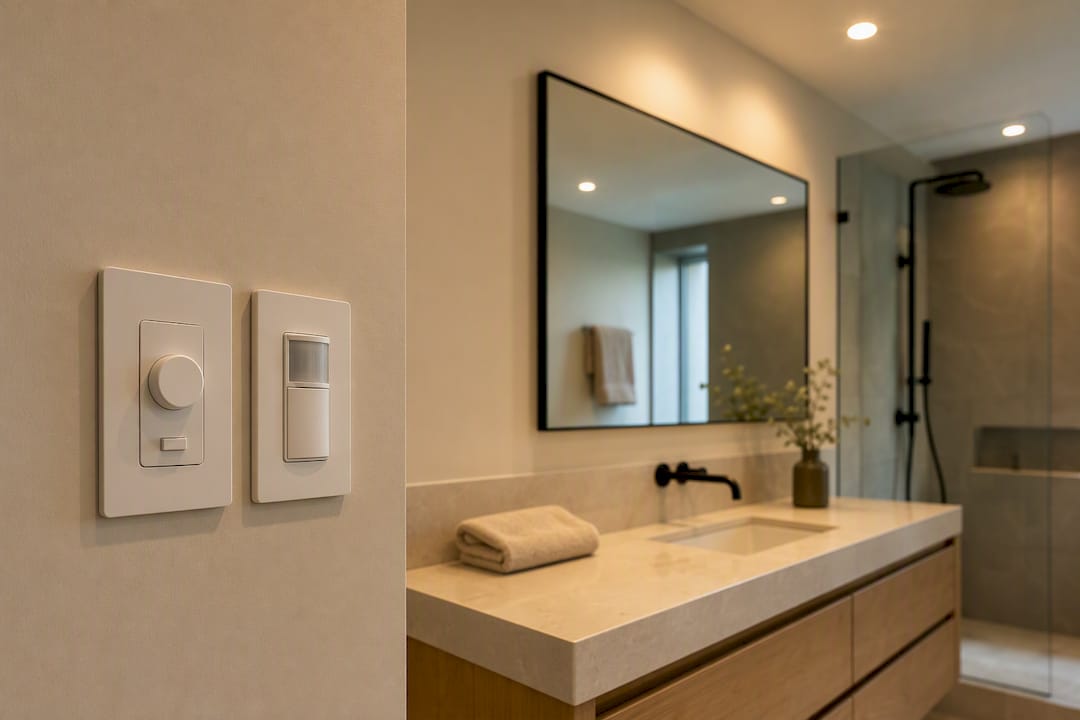
Lighting and controls. Remodels that add or relocate fixtures generally need high-efficacy lighting and, in many rooms, mandatory controls like vacancy sensors or dimmers. This applies broadly across kitchen and bathroom remodels where recessed lighting gets added during a ceiling rework.
Mechanical systems. Heat pump systems now serve as the technical baseline for HVAC and water heater replacements. Ducted systems typically require duct leakage testing, and many jurisdictions require HVAC commissioning to confirm the system operates as designed before final signoff.
PV and electric-ready thresholds. Additions and major alterations can trigger solar-readiness or electric-ready wiring requirements, particularly around water heating and cooking circuits, even when full solar installation isn’t required for the specific scope.
- Confirm your climate zone before finalizing window orders, since U-factor and SHGC minimums differ by zone.
- Ask your contractor whether your HVAC replacement needs duct leakage testing under the new baseline.
- Request NFRC labels and cut sheets for every rated product before submittal, not after.
Pro Tip: Order one extra set of manufacturer spec sheets for every rated product (windows, water heater, HVAC unit) and hand them to your contractor before installation begins. Missing cut sheets during CF2R verification are one of the most common causes of a stalled final inspection.
How the CF1R, CF2R, and CF3R Compliance Process Works
Three forms carry your project through Title 24 compliance, and each one serves a different stage of the build. Understanding what each one actually verifies keeps you from being blindsided at inspection.
The CF1R is your compliance certificate, filed at permit submission. It documents the energy features your plans claim, calculated either through the prescriptive path (a fixed checklist of minimums) or the performance path (energy modeling software that trades off different measures against each other). Mandatory measures apply under either path.
The CF2R documents what actually gets installed, filled out by the installing contractor as work progresses. This is where a mismatch with the CF1R causes trouble: if your CF1R specifies a particular heat pump model and your supplier substitutes a different unit mid-project, the CF2R needs to reflect reality, and someone has to reconcile the paperwork.
The CF3R is the verification form, often requiring a HERS Rater to perform field testing, such as duct leakage testing or HVAC commissioning checks, and confirm the installed system performs as claimed.
Practical sequencing matters here:
- Duct leakage and HVAC commissioning tests typically happen near substantial completion, not at rough framing.
- HERS Raters need scheduling lead time, particularly during busy permitting seasons in Los Angeles County.
- Plan-check correction letters most often stem from CF1R entries that don’t match what a reviewer expects to see on the drawings, like a window schedule that lists different U-factors than the CF1R calculation used.
Book your HERS Rater or acceptance-test technician as soon as your HVAC and window specs are locked, not after installation. Waiting until the final week before inspection is the single most common reason projects lose weeks to rescheduling.
Why Your Climate Zone Determines Your Compliance Requirements
California splits into 16 distinct climate zones, and Title 24 sets different insulation, fenestration, and HVAC performance baselines for each one. A remodel in coastal Santa Monica and one in the high desert near Palmdale can face meaningfully different window SHGC requirements even though both projects sit within Los Angeles County. Your parcel’s climate zone, not your city name, is what governs the numbers on your CF1R.
You can confirm your zone through the CEC’s climate zone maps or through parcel lookup tools many energy consultants use during design. Get this number locked in before you finalize window orders or insulation specs, since a mistaken zone assumption can send your compliance calculation sideways late in the process.
- Insulation R-value minimums shift by zone, sometimes significantly between coastal and inland areas.
- Window U-factor and SHGC thresholds are zone-specific, not statewide flat numbers.
- HVAC efficiency baselines can vary depending on regional heating and cooling loads.
Beyond the state minimums, some California cities and counties adopt local reach codes under CALGreen’s voluntary provisions, layering additional requirements onto the statewide floor. Before you finalize a scope, check with your local building department for any reach code amendments that might apply beyond Title 24 itself.
Your Permit-Ready Checklist Before Submitting Plans
Getting from design to a filed permit without a correction letter takes a specific sequence, and skipping steps almost always costs more time than following them in order.
- Confirm your permit application date and which code cycle governs it. If submission is likely to land on or after January 1, 2026, design to the 2025 standards from the start rather than retrofitting calculations later.
- Assemble rated product data early. Collect NFRC window labels, HVAC equipment specification sheets, and lighting fixture schedules before your designer finalizes the CF1R.
- Decide conditioned versus unconditioned space with your designer up front. This single decision changes insulation, HVAC sizing, and sometimes ventilation requirements for the entire scope.
- Schedule HERS Raters or acceptance-test technicians as soon as equipment specs are locked, and build their availability into your overall project timeline rather than treating it as an afterthought.
- Package your submittal so CF1R fields match exactly what’s going to be installed. Cross-check window schedules, equipment models, and lighting counts against the CF1R before it goes to plan check.
Pro Tip: Keep a single shared document listing every rated product by manufacturer model number as your design finalizes. When your CF1R, your supplier’s order, and your installer’s paperwork all reference the same document, CF2R reconciliation takes minutes instead of days.
How Mrbuild Builds Compliance Into the Remodel Process
Mrbuild treats Title 24 as a design input, not a late-stage form to fill out. During early planning for kitchen and bathroom remodels, our team checks window, lighting, and mechanical selections against climate zone requirements before ordering, so clients aren’t stuck reordering a rated window after a plan-check comment.
Documentation gets packaged so CF1R entries match installed equipment model for model, which keeps CF2R and CF3R verification straightforward instead of adversarial. On site, our crews photograph and log air-sealing details and duct runs at pre-drywall inspection, creating a verifiable record that speeds up verification once a HERS Rater is on site. For additions and ADUs, this same discipline applies to conditioned-space calculations before framing begins, not after.
Why Early Code Planning Protects Your Design and Your Schedule
Homeowners lose more design flexibility to late code discovery than to the code itself. When a preferred window or heat pump model gets locked in during early design rather than swapped in after a plan-check rejection, the project keeps its original character instead of settling for whatever’s available on short notice.
Projects that schedule HERS verification early in the timeline consistently move through final inspection faster than those that treat testing as a last-minute checkbox. The lesson isn’t complicated: bring up Title 24 in your first meeting with your contractor, not your third. Ask directly which compliance path applies, whether a HERS Rater will be involved, and what your climate zone requires. That one conversation, held early, prevents most of the surprises that stall permits later.
— David S.
Start Your Title 24 Compliant Remodel With Mrbuild
Homeowners who work with a general contractor already handling energy code compliance skip the back and forth of coordinating a separate energy consultant, a HERS Rater, and a designer who aren’t talking to each other. Mrbuild manages that coordination directly, folding CF1R planning, rated product selection, and inspection scheduling into the same project timeline as your ADU or home addition, kitchen remodel, or whole-home remodel.

That means one point of contact managing your permit submission, your equipment orders, and your on-site verification, rather than three separate parties working from three separate assumptions about your climate zone or your code cycle. If your remodel touches windows, HVAC, water heating, or adds conditioned space, start with a consultation where we scope your project against the current code cycle and outline what documentation we’ll need from you before submittal. Reach out through Mrbuild’s project page to schedule that first conversation.
Where to Find Official Title 24 Resources
For the source documents behind every requirement in this guide, start with the CEC’s 2025 Energy Code summary and the Building Energy Efficiency Standards program page, which hosts compliance manuals, CF1R/CF2R/CF3R forms, and the Energy Code hotline. For compliance path questions, the Title 24 FAQ explains prescriptive versus performance modeling in plain terms.
Sources
- 2025 California Energy Code summary (CEC)
- Title 24 FAQ | Title 24 Calcs
- 2025 Title 24 Code: What It Means for Your Remodel Permit
FAQ
What is the latest California Energy Code?
The 2025 California Energy Code is the current standard, adopted by the CEC in 2024 and effective for permit applications submitted on or after January 1, 2026. Projects with earlier permit dates remain governed by the 2022 code cycle.
What are the Title 24 window requirements for 2026 in California?
Replacement windows must carry an NFRC label showing U-factor and SHGC values that meet minimums set for your specific climate zone, and those thresholds vary across California’s 16 zones rather than applying as one statewide number.
Is Energy Upgrade California legit?
Energy Upgrade California is a state-affiliated public information initiative connected to California’s energy agencies, and it’s a legitimate resource for homeowner-facing guidance on efficiency upgrades and available programs, though specific rebate offers and eligibility should always be confirmed directly with the administering program.
Is there a free window replacement program in California?
Some utility-run and state-affiliated programs offer income-qualified assistance toward window and efficiency upgrades, but availability, eligibility, and funding change frequently. Check directly with your utility provider or the CEC for current program status rather than relying on general claims.
Does a kitchen or bathroom remodel always require Title 24 review?
No. Purely cosmetic work like refinishing cabinets or swapping fixtures usually stays outside energy compliance, but adding recessed lighting, relocating an exhaust fan, or replacing a water heater during that same remodel typically brings the project under Title 24 review.

