


Bathroom tile in 2026 is all about tactile, handmade-look surfaces, warm color drenching, and textured details, not cool-gray minimalism. The headline looks are zellige and handmade-style tile, tile drenching, fluted or 3D texture, stacked vertical layouts, and earthy palettes like clay and olive. If your budget is tight, start small: regrout an existing floor in a warm tone or swap in ceramic zellige-effect tile for a fraction of the cost of the real thing.
TL;DR:
- Ceramic zellige-effect tiles offer an affordable way to achieve the artisanal, handmade look at a fraction of the cost of true handmade tiles.
- Tile drenching using large-format tiles enhances visual continuity and makes small bathrooms appear more spacious and calm.
- Textured tiles are best used as accent features in specific walls or niches to avoid overwhelming the space and complicating maintenance.
- Vertical stacked layouts and strategic pattern use, confined to small areas like powder rooms, keep the design feeling modern and focused.
- Warm, earthy color palettes backed by durable finishes like matte or low-sheen gloss are expected to remain stylish and timeless through future updates.
Table of Contents
- Top Bathroom Tile Trends 2026: What’s Leading and Where to Use It
- Warm Palettes and Finishes That Define 2026
- Where Textured Tile Works Best (and Where It Doesn’t)
- Layouts That Make 2026 Tile Feel Current
- Stone, Porcelain, or Ceramic: What Actually Belongs in a Wet Room
- How to Choose Tile for Your Bathroom
- Mr Build Co.’s Approach to 2026 Tile Trends in Real Projects
- Are Smart Tiles Part of the 2026 Bathroom Conversation?
- How to Combine Trends Without Overloading the Room
- Will These Trends Last, and How Do You Future-Proof Your Tile Choice?
- An Editorial Take on Chasing 2026 Tile Trends Wisely
- Sources
Top Bathroom Tile Trends 2026: What’s Leading and Where to Use It
The shift away from stark white subway and gray porcelain has been building for a couple of years, and 2026 is when it becomes the default rather than the exception. Design editors are pointing to imperfect, hand-glazed surfaces and rich, earthy color as the core direction for the year, replacing the sterile look that dominated the last decade, according to Livingetc’s 2026 tile roundup. Here’s how the leading trends break down and where each one actually earns its place in a bathroom.
- Zellige and handmade-look tile. These glazed, slightly irregular tiles catch light unevenly, giving walls a rippled, artisanal texture that flat tile can’t fake. They shine on shower walls, backsplashes, and niches, where a smaller footprint keeps both cost and maintenance manageable. True hand-glazed zellige runs $25 or more per square foot, but ceramic zellige-effect versions cost about $6 to $12 per square foot and still deliver most of the visual character, since a well-made ceramic can reproduce roughly 80 percent of the handmade look at around 20 percent of the cost.
- Tile drenching. Running one tile continuously across the floor and up the walls erases the visual break at the tub line or shower curb, making a small bathroom feel larger and calmer. It works best with a mid-size format, roughly 4 by 8 inches to 12 by 24 inches, and a grout color close to the tile itself so the surface reads as one plane rather than a patchwork.
- Textured tile. Fluted, reeded, and other 3D surfaces are showing up as accent walls rather than full-room treatments. Trade coverage from events like Cersaie has pushed these tactile finishes into mainstream product lines for 2026, and the raised ridges do real work catching light that flat tile simply reflects back.
- Stacked vertical layouts. Setting rectangular tile in a straight vertical stack, rather than the running-bond brick pattern that has dominated subway tile for years, draws the eye upward and makes ceilings feel higher. It also reads noticeably more current than the offset pattern most builders have used since the 2010s.
- Pattern revival. Checkerboard floors and cement-look patterned porcelain are back, and designers specifically recommend confining them to powder rooms and small baths, where the drama pays off without overwhelming the space or the budget, per Studio Cement Tile’s 2026 trend coverage.
- Large-format, continuous surfaces. Bigger tiles mean fewer grout lines, which means less visual clutter and easier cleaning, an approach that pairs naturally with the drenching trend above.
Warm Palettes and Finishes That Define 2026
Cool gray is giving way to color that feels like it belongs in a sunlit courtyard rather than a hospital corridor. Clay, ochre, terracotta, and sage have become the new base neutrals, with design outlets tracking this shift toward warm, earthy tone families as the defining palette move of the year, per Livingetc.
For homeowners who want drama without redoing an entire bathroom, deeper accent colors are doing the heavy lifting in smaller doses:
- Oxblood and deep forest green for a powder room’s feature wall
- Charcoal paired with brass or matte black fixtures for a moody primary bath
- Warm clay tones as the dominant floor color, with white or cream walls to keep the space from feeling closed in
Finish matters as much as color. Matte and soft-glaze finishes hide water spots better than high-gloss tile and suit the handmade aesthetic, while a low-sheen gloss still works well in darker, less naturally lit bathrooms where you need the extra light bounce. Grout is the detail people skip and shouldn’t: a warm gray or tone-matched grout can shift a whole floor from cold to inviting without touching the tile itself.
Pro Tip: Order a physical sample of both tile and grout together before you commit. Grout dries several shades lighter than it looks wet in the tub, and that difference is exactly what separates a cohesive floor from a mismatched one.
If you’re coordinating tile with cabinetry or door finishes, warm wood tones and matte black hardware tend to pair well with these earthy palettes, a detail worth checking with resources like One Day Doors & Closets’ bathroom door guide if you’re updating more than just the floor.
Where Textured Tile Works Best (and Where It Doesn’t)
Fluted and reeded tile looks striking in photos, but it behaves differently once it’s on your wall under your bathroom’s actual lighting. Use it on a single surface, a vanity wall, a shower niche, or one accent wall, rather than wrapping an entire room in ridges. A full room of textured tile can feel busy fast, and it multiplies your cleaning surface area for no real design payoff.
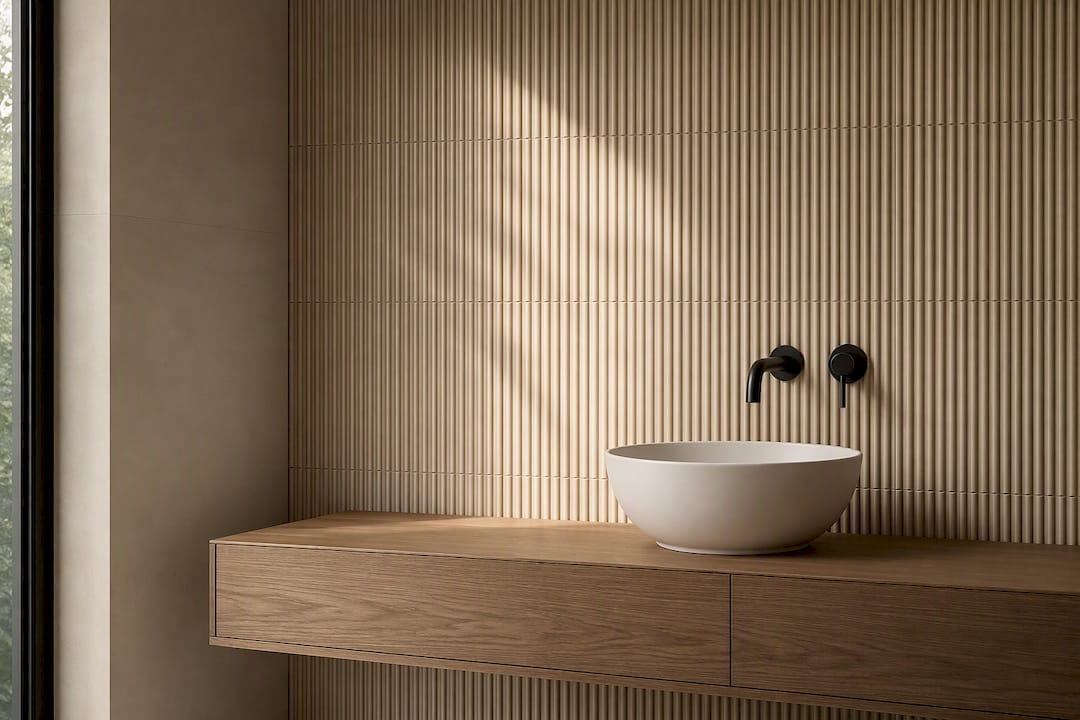
Lighting does most of the work here. Directional light, whether from a sconce or a recessed can angled across the wall, catches the ridges and throws shadow lines that flat lighting simply won’t produce. A textured wall lit head-on from above can look almost flat by comparison, so it’s worth testing a sample under your actual bathroom lighting before installation, not just under the showroom’s.
Maintenance is the real trade-off. The grooves in fluted tile collect soap scum and moisture more readily than a flat surface, so:
- Choose a grout with strong mold resistance in wet zones
- Ask your installer about a penetrating sealer for the grout lines specifically, not just the tile face
- Plan on a slightly more frequent cleaning routine than you would with flat subway tile
Layouts That Make 2026 Tile Feel Current
The layout you choose often matters more than the tile itself. A dated pattern on a beautiful tile still looks dated.
- Choose stacked vertical for height, running bond for movement. Stacked layouts elongate a wall and suit modern, minimal spaces; running bond still reads as classic and forgiving in bathrooms with imperfect walls.
- Match tile size to your drenching plan. A continuous floor-to-wall tile job needs a size that won’t look busy at scale, generally mid-size formats, with grout color kept close to the tile to minimize visual seams.
- Save bold pattern for contained spaces. Checkerboard and cement-look patterns hit hardest in a powder room or a shower niche, where the whole pattern is visible at once rather than broken up by fixtures.
- Order 10 to 15 percent extra tile for patterned layouts. Cuts, breakage, and dye-lot variation eat into your margin faster on patterned floors than on plain ones.
Stone, Porcelain, or Ceramic: What Actually Belongs in a Wet Room
Real stone still has a pull nothing else quite matches. Travertine and onyx bring natural veining and warmth that no printed surface fully replicates, but that beauty comes with obligations: sealing on a regular schedule, care with acidic cleaners, and a higher tolerance for etching and patina over time.
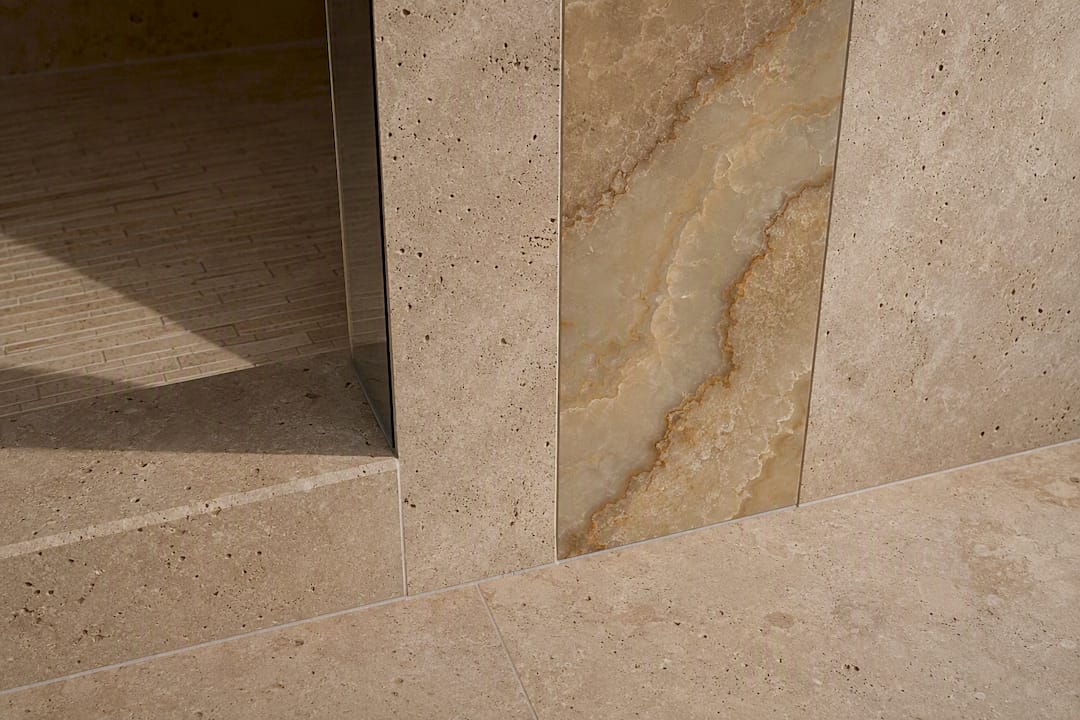
Stone-look porcelain has become the practical answer for most wet areas. It’s waterproof without sealing, resists staining, and costs less than quarried stone, all while echoing the movement and color variation people want from a stone floor, a trade-off manufacturers have leaned into heavily for 2026. Zellige-effect ceramic plays a similar role for handmade tile: it won’t have the exact glaze irregularity of hand-cut Moroccan zellige, but at $6 to $12 per square foot against $25-plus for the real thing, it gets most homeowners close enough that guests won’t know the difference.
If a full retile isn’t in the budget this year, four updates deliver a real chunk of the trend without the full cost:
- Regrout existing tile in a warm tone to modernize the whole floor’s look
- Paint outdated tile in a single, saturated color for a temporary drenched effect
- Retile just one surface, a shower niche or accent wall, and leave the rest alone
- Swap in ceramic zellige-effect tile anywhere you’d otherwise use the real, pricier version
Design outlets have specifically flagged regrouting and single-surface retiling as the most cost-effective updates available for 2026, which makes them a smart first move if you’re not ready for a full remodel.
How to Choose Tile for Your Bathroom
A good tile choice starts with the room’s job, not the showroom display. Walk in with these questions answered before you buy anything.
- Confirm the slip rating for floors. Wet-area floors need a rating suited to bare feet on water, something your installer or tile retailer should be able to confirm on the spec sheet.
- Match tile size to room size. Larger formats suit larger rooms and fewer grout lines; smaller mosaics and zellige work well in tight niches and accent zones.
- Pick grout color deliberately. Matching grout blurs the tile into one surface; contrasting grout highlights the individual tile shapes, which matters more on patterned floors than plain ones.
- Get a real budget per square foot, installed. Material cost is only part of the number; ask what labor, substrate prep, and waste factor add to the total.
- Ask about lead time before you commit to a layout. Imported or handmade-look tile can take weeks longer to arrive than stocked porcelain.
Before hiring an installer, ask directly about substrate preparation, which grout and sealer they recommend for your specific tile, what the workmanship warranty covers, and whether they’ll let you approve a physical sample before full installation.
Pro Tip: Treat a contractor’s refusal to provide samples or a written installation warranty as a red flag, not a minor inconvenience. Wet-area tile failures are expensive to fix after the fact.
Mr Build Co.’s Approach to 2026 Tile Trends in Real Projects
A powder room remodel we approach today might pair a checkerboard porcelain floor with a single zellige-effect accent wall behind the vanity, using budget-conscious ceramic to keep the statement affordable. For a primary bath, tile drenching in a large-format stone-look porcelain across the floor and shower walls creates that seamless, continuous look clients are asking for, coordinated carefully with fixture finish and grout tone so nothing fights for attention.
Project planning matters as much as the tile itself. We recommend ordering overage for patterned layouts, building in realistic lead times for specialty tile, and sealing any natural stone before it ever sees water. If you’re planning a project along these lines, our bathroom remodeling team can walk through material and layout choices with you directly.
Are Smart Tiles Part of the 2026 Bathroom Conversation?
Not in any meaningful way yet, and that’s worth saying plainly. The 2026 tile story is overwhelmingly about material, texture, and color, not embedded technology. Heated flooring systems installed beneath tile remain the most practical tech upgrade homeowners are actually adopting, since they solve a real comfort problem without changing how the tile itself looks or performs.
Antimicrobial glazes and easier-to-clean surface treatments have appeared in some commercial and hospitality tile lines, but they haven’t become a mainstream residential bathroom trend the way warm palettes and texture have. If a “smart tile” product with embedded sensors or lighting reaches real adoption, it’s more likely to show up first in high-end primary suites than as a broad market trend, and even then, the visual trends covered above will still dictate what that tile looks like on the surface.
For now, the honest advice is to spend your renovation budget on the material, layout, and color choices that are actually driving 2026 bathrooms, and treat radiant floor heating as the one genuine tech upgrade worth budgeting for separately.
How to Combine Trends Without Overloading the Room
The biggest mistake homeowners make when chasing tile trends is trying to use all of them at once. Designers covering the 2026 shift are consistent on this point: pick one dominant tile story per room and let everything else support it, rather than compete with it, according to Livingetc’s trend coverage.
That means if you’re drenching a bathroom in one warm, textured tile, skip the bold patterned floor in that same room. If you’re doing a checkerboard statement floor, keep the walls simple and let plain tile or paint carry the rest of the space. Texture and pattern are both visually loud; stacking them competes for attention instead of building one strong impression.
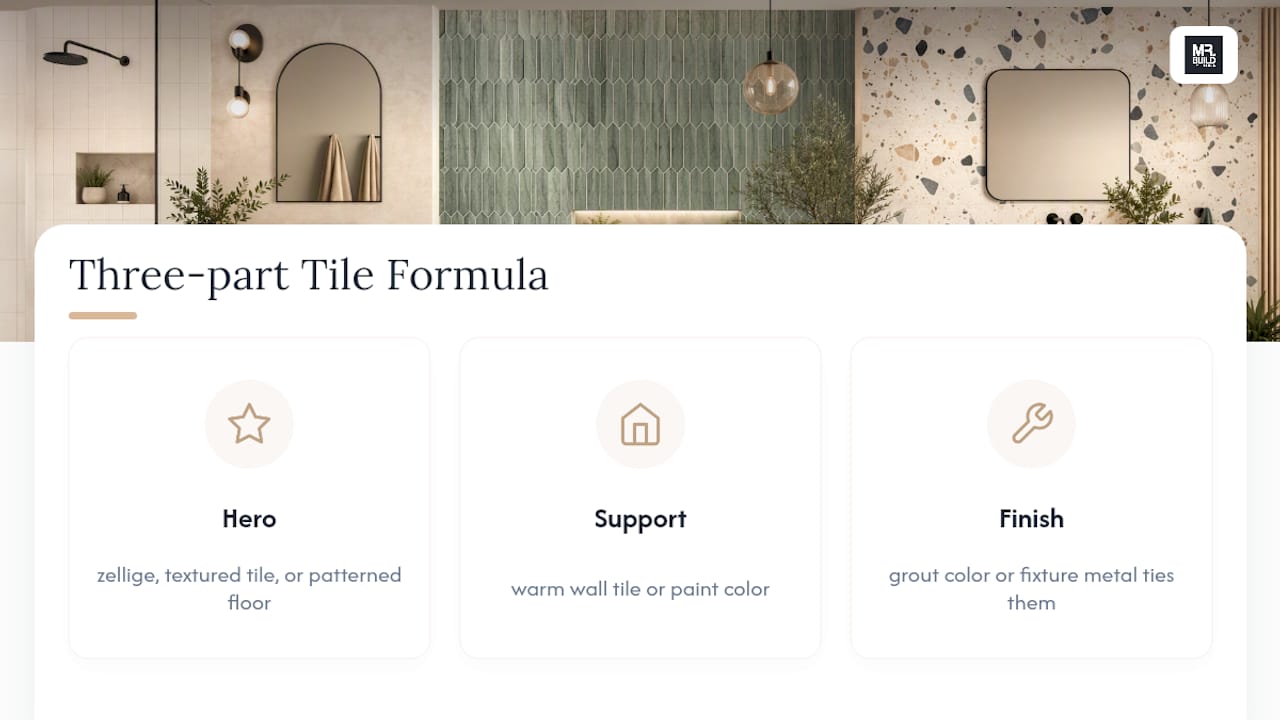
A workable formula: choose one hero material (zellige, textured tile, or a patterned floor), one supporting neutral (a warm wall tile or paint color), and one finish detail (grout color, fixture metal) that ties the two together. Small rooms, like powder rooms, can handle more intensity because the whole space reads as one gesture. Larger primary baths benefit from restraint, since a busy pattern that reads as charming in a five-foot powder room can feel chaotic across forty square feet of primary bath floor.
Will These Trends Last, and How Do You Future-Proof Your Tile Choice?
Warm palettes and handmade-look texture have staying power because they’re a correction, not a fad. The cool-gray, ultra-minimal look had a long run, roughly a decade, and design cycles tend to swing the opposite direction once a look becomes ubiquitous enough to feel dated rather than fresh. Earthy tone and tactile surface are likely to hold for several years rather than fading by next season.
Layout choices like stacked vertical tile and tile drenching are even more durable, since they’re structural decisions rather than color trends. A neutral stacked-tile wall in a warm off-white will look reasonable for a decade regardless of which accent colors rotate through in throw rugs and towels.
The riskiest choices are the highest-contrast ones: a full-room bold checkerboard floor or an intensely saturated color on every surface. Confine those to a powder room, where a future update means repainting one wall or replacing a small floor area, not gutting a primary bath. If you want a tile choice that ages well, prioritize a warm neutral base tile, a durable porcelain or well-sealed stone, and save the boldest pattern or color for the smallest, cheapest-to-change room in the house.
An Editorial Take on Chasing 2026 Tile Trends Wisely
The conventional trend coverage gets one thing wrong: it treats zellige, tile drenching, and fluted texture as separate purchases you shop for individually, when the smarter move is treating them as one decision about warmth and restraint. The research is consistent on this. Homeowners who pick a single dominant material and commit to it get a room that reads as intentional. Homeowners who layer three trends at once, hoping more equals better, usually end up with a bathroom that looks like a showroom floor, not a home.
Where most advice falls short is cost transparency. Plenty of articles show you a $25-per-square-foot zellige wall without mentioning the $6 to $12 ceramic version sitting right next to it in the same showroom. That gap is the real story for most renovation budgets.
If you’re prioritizing anything first, prioritize the base layer: your dominant tile, your palette, your layout. Get that right, and the textured accent wall or checkerboard powder room becomes an easy, low-risk addition later. Get it backward, chasing accents before settling the fundamentals, and you’ll be re-doing work within a few years. For a project of any real scope, a conversation with a complete remodeling team before you buy tile will save you from that mistake.
— David S.
Sources
- Bathroom tile trends 2026: colors, shapes & finishes
- 7 bathroom tile trends you’ll see everywhere in 2026 | Livingetc
- Emerging Tile Trends for 2026

